An air of ancient mystery combined with open-hearted hospitality defines the experience of stepping onto the fertile soils of the South Caucasus. Nestled securely between the majestic heights of the Greater Caucasus mountains and the glittering beaches of the Black Sea, this country offers a travel landscape that feels entirely untouched by the clinical homogenization of modern tourism. It is a territory where medieval defense towers guard isolated alpine communities, where high-altitude stone churches overlook vast river gorges, and where local communities have successfully guarded their unique language, alphabet, and traditions against countless invading forces throughout history.
To journey through this fascinating land is to participate in an ongoing celebration of life, heritage, and deep connection to nature. Whether you find yourself wandering through the architectural contradictions of a rapidly modernizing capital city or listening to the complex, haunting harmonies of polyphonic singing inside an early medieval monastery, you will recognize that you have arrived somewhere completely extraordinary. Crafting the perfect itinerary requires an understanding of the diverse regional identities and dramatic geographic shifts that await you around every mountain bend. For anyone ready to embark on this unforgettable journey, planning with the comprehensive insights of an ultimate guide to visiting Georgia ensures you experience the absolute pinnacle of what this enchanting destination has to offer.
The Architectural Layer Cake of a Resilient Capital
Winding Trails and Sulfur Springs in Abanotubani
The historical narrative of the nation begins dynamically in the ancient streets of its capital, a city whose very location was determined by the presence of natural, therapeutic thermal waters. Stepping into the historic Abanotubani district introduces visitors to the iconic brick domes of the historic sulfur baths, which have provided comfort and healing to weary Silk Road travelers, poets, and emperors for centuries. Above these subterranean bath chambers, a network of historic homes featuring colorful, cantilevered wooden balconies clings tightly to the sheer rock faces of the narrow river canyon, offering a striking visual testament to the community's domestic architectural style.
Dramatic Skylines and Avant-Garde Spaces
Looking upward from the historic cobblestone lanes reveals a city skyline that boldly embraces futuristic urban design and architectural modernization. Sleek, undulating glass structures like the Bridge of Peace and the contemporary music theater tubes stand in playful contrast to the heavy, historic masonry of the fourth-century Narikala Fortress overlooking the valley. This intentional juxtaposition of the ancient and the avant-garde extends into the city's thriving creative hubs, where former industrial factories and Soviet-era printing houses have been completely transformed into bohemian complexes filled with independent art galleries, artisanal cafes, and vibrant communal spaces.
Ascending the Spine of the Greater Caucasus
The Cinematic Mastery of the Military Highway
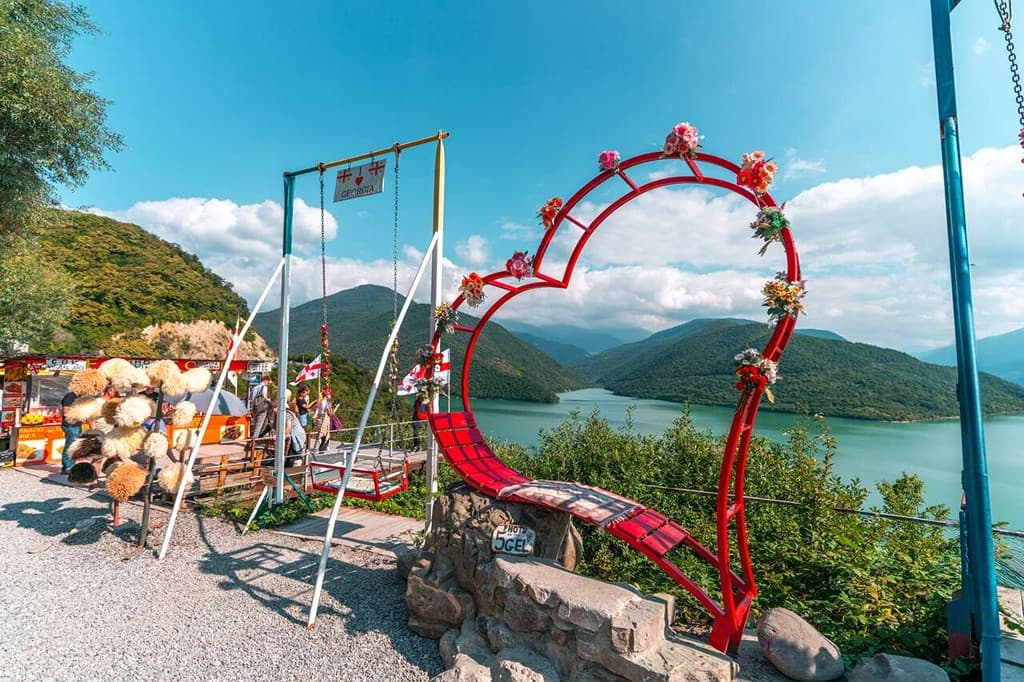
Journeying northward from the low valleys toward the high mountain borders involves traversing one of the most spectacularly scenic and historically significant alpine roads in the entire world. The historic highway winds gracefully alongside the glowing turquoise expanses of the Zhinvali Reservoir before climbing dramatically into the jagged limestone heart of the mountain range. Along this rugged route, the landscape transforms rapidly from gentle, forested hillsides into a dramatic mountain theater of sheer cliffs, plunging river gorges, and cascading waterfalls that completely captivate modern road travelers.
The Spiritual Isolation of Stepantsminda
The high-altitude crowning glory of the northern mountain journey is the isolated settlement of Stepantsminda, resting at the base of the massive Mount Kazbek. The primary visual anchor of this dramatic alpine territory is the fourteenth-century Gergeti Trinity Church, sitting entirely alone on a high mountain ridge beneath the snow-covered slopes of the dormant stratovolcano. Looking up at this simple stone sanctuary silhouetted against the colossal peaks provides an unforgettable glimpse into the spiritual connection between the mountain communities and the wild wilderness that surrounds them.
The Ancient Rhythms of the Wine Valleys
Eight Thousand Years of Continuous Viticulture
Heading eastward across the mountain passes leads travelers into the expansive plains of Kakheti, a region that holds the undisputed title of the oldest continuous wine-producing territory on earth. Archaeological excavations here have uncovered ancient clay storage jars containing residual grape seeds that date back over eight millennia, proving that local communities were mastering viticulture while humanity was first developing agriculture. The traditional winemaking methodology involves using massive, underground clay vessels called qvevris, a specialized process that yields complex, skin-contact amber wines completely distinct from Western varieties.
Celebrations of Fellowship and Poetic Toasting
Wine within this cultural context is never viewed merely as a luxury item or a casual beverage; it serves as a central pillar of communal life, hospitality, and cultural preservation. Participating in a traditional feast, or supra, provides a direct window into the warm soul of rural hospitality, as a designated toastmaster guides the evening through structured, deeply meaningful toasts that celebrate friendship, memory, and homeland. The tables overflow with traditional regional specialties, ensuring that the act of sharing a meal becomes a joyful, life-affirming ritual of human connection.